Testing our way to a 15% conversion lift at Grubhub
Built the Diner Retention design team from the ground up and led the core diner experience through Grubhub’s highest-growth period — A/B testing every feature we designed, for a 15%+ cumulative conversion lift with the App Store rating held above 4.8.
- Role
- Product Design Manager
- Company
- Grubhub
- Year
- 2017–2018
Context
Grubhub was in its highest-growth years, and the diner app — iOS, Android, and web — was where that growth was won or lost. I joined to build the Diner Retention design team, growing it from 2 to 6, and then took on the core diner experience with 10+ product and content designers.
Problem
Growth at that pace exposes every seam: three platforms drifting apart, features shipped on conviction rather than evidence, and a small team asked to cover the whole ordering journey from finding a restaurant to checkout and coming back again.
Approach
Test every feature we designed. Nothing shipped on opinion. Every design change ran as an A/B test against a measurable outcome — conversion, retention, rating — so the team learned what actually moved diners, and design earned a seat in roadmap decisions with numbers rather than mock-ups.
One design system across iOS, Android, and web. Established the shared system so the three platforms stopped diverging and the team could ship a change once and carry it everywhere.
Google design sprints, one or two a month. Made sprints a standing practice for the hardest problems, so discovery and validation happened with real diners before anything was built.
What we shipped
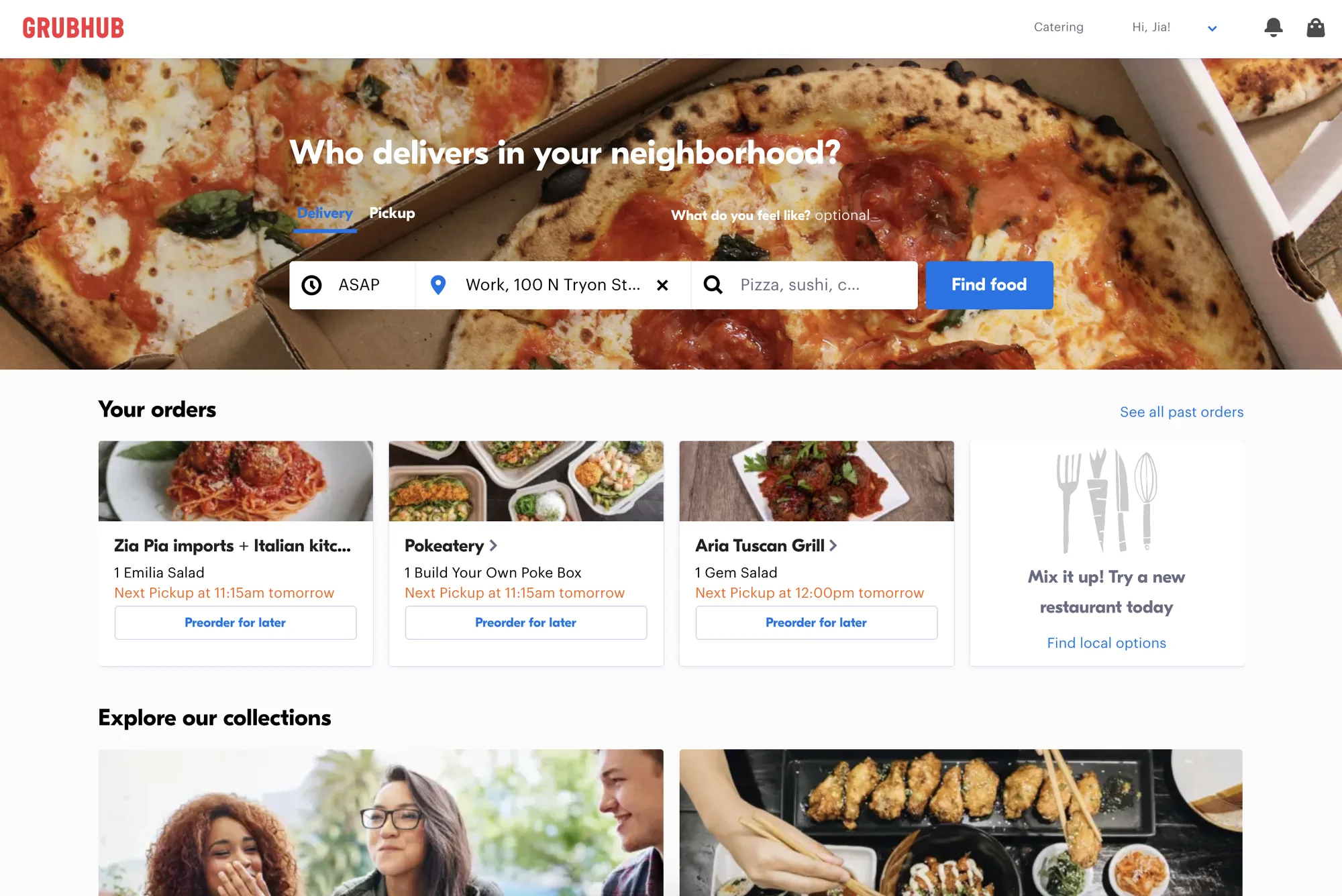
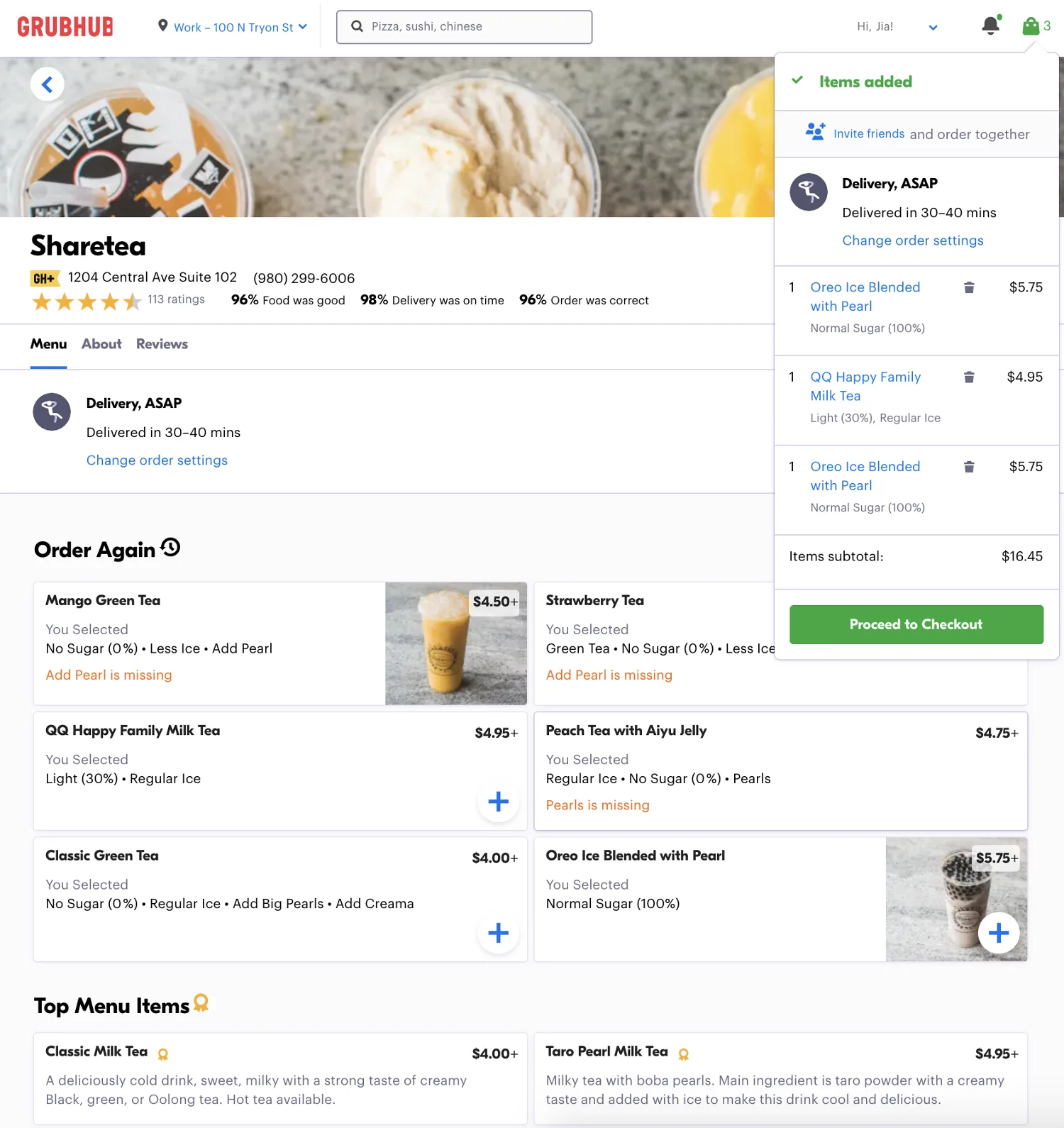
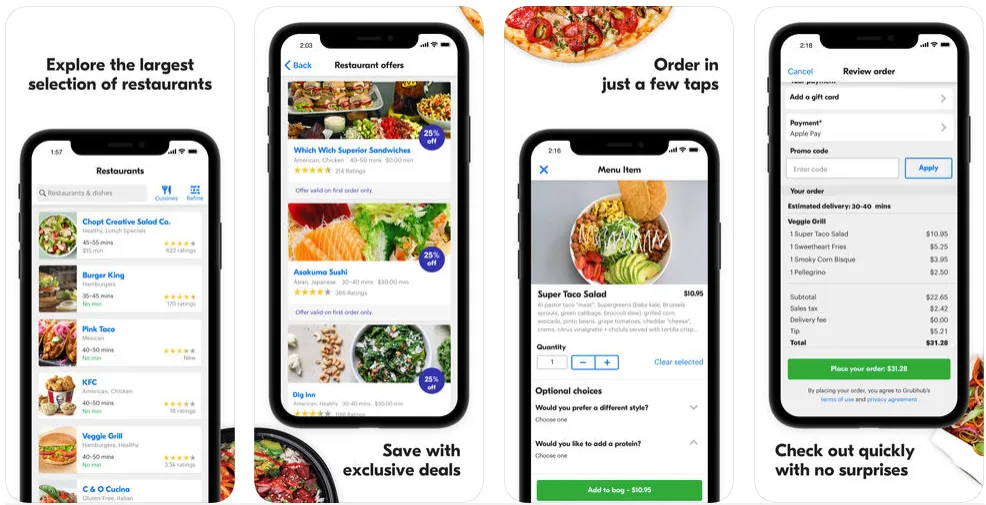
The winning tests clustered in four areas: profile, personalization, promos and loyalty, and reviews — each one a place where remembering the diner, or rewarding them, turned a visit into an order.
Outcome
- 15%+ cumulative conversion lift from winning A/B tests across profile, personalization, promos and loyalty, and reviews
- App Store rating held above 4.8 through the growth period
- A design team of 10+ product and content designers, a shared design system across three platforms, and a sprint cadence the team kept running
What I’d do differently
I was a fairly new manager then — three years in — and not as well-rounded as I could have been in how I coached designers and negotiated with my peers. The designers were so talented that it felt like we could do anything if we put in the hard work, and I led that way. In hindsight I would give more grace. When a hypothesis didn’t win, my instinct was to push straight on to the next solution; I would slow down instead and give a fast-moving team time to recharge.
What I carry forward
A/B testing every feature is what taught me to speak funnel with marketing and dollars with finance. It is the habit behind everything I’ve done since in acquisition design: earn the roadmap with evidence, and let the numbers, not the loudest voice, decide what ships.